Real World Camera-to-Cloud. AOTV’s Remote Editing Workflow in NYC and Berlin
There’s an increasing need for "closer to capture" delivery. Ten years ago, a 5-day turnaround on an event capture was standard. Now, we’re asked to deliver much quicker and with significantly more content.
Working in events means extensive travel across the country and the world. Our clients are mostly UK-based, but their audience is global. They want consistency; we’ve built their visual language over the years, honed our edits to promote their brand identity, and set a standard. They want to work with us whether they’re in London, New York, or Berlin.
However, as a corporate responsibility, we are constantly trying to reduce our CO2 impact while simultaneously protecting our crew’s work-life balance by reducing the need to be away from home for long periods of time. We’ve been looking at how new technology can help us with these goals - lowering our carbon footprint, allowing our crew to spend more time with families, while also bringing down costs for the client.
For our recent work with LeadDev, we decided to put this to the test.
The Mission: Replicating Fast Deliverables via the Cloud
For LeadDev, the requirements were high-volume and high-speed. This wasn’t an R&D experiment; it was a real-life client requirement with content needs we couldn't fail to deliver on.
The deliverables list included:
Same-day event highlights.
Multi-cam and multi-stage recording.
Slides capture with embedded audio.
Same-day vox pops with sponsors.
Post-event talks cuts.
Retention of all footage for future deliverables.
We decided to trial and stress-test a remote editing workflow for LeadDev’s same-day deliverables.
The Core Stack
We knew we were searching for a robust Camera to Cloud (C2C) workflow, with the aim of getting on-site rushes sent across to our remote editor as quickly as possible.
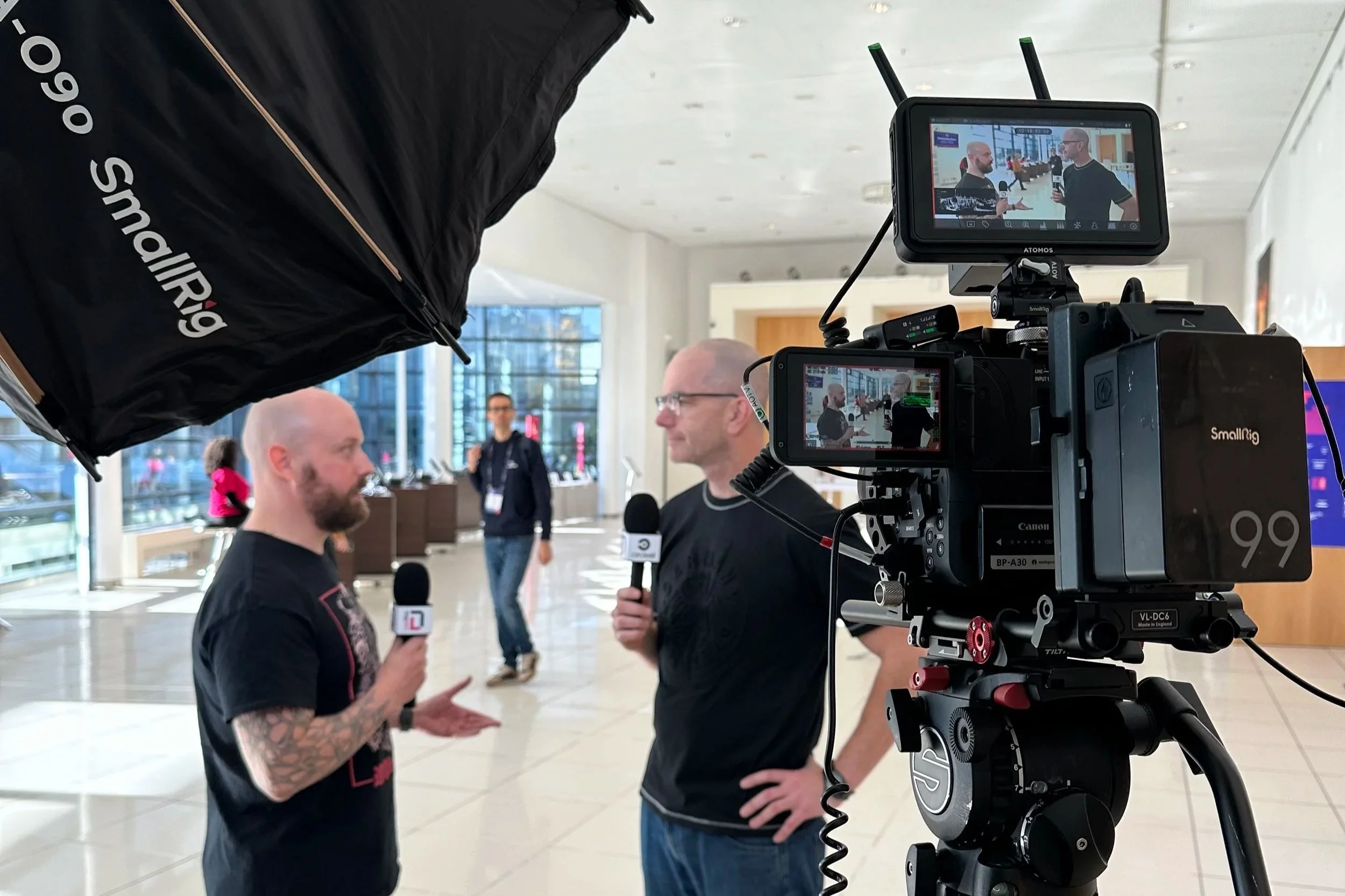
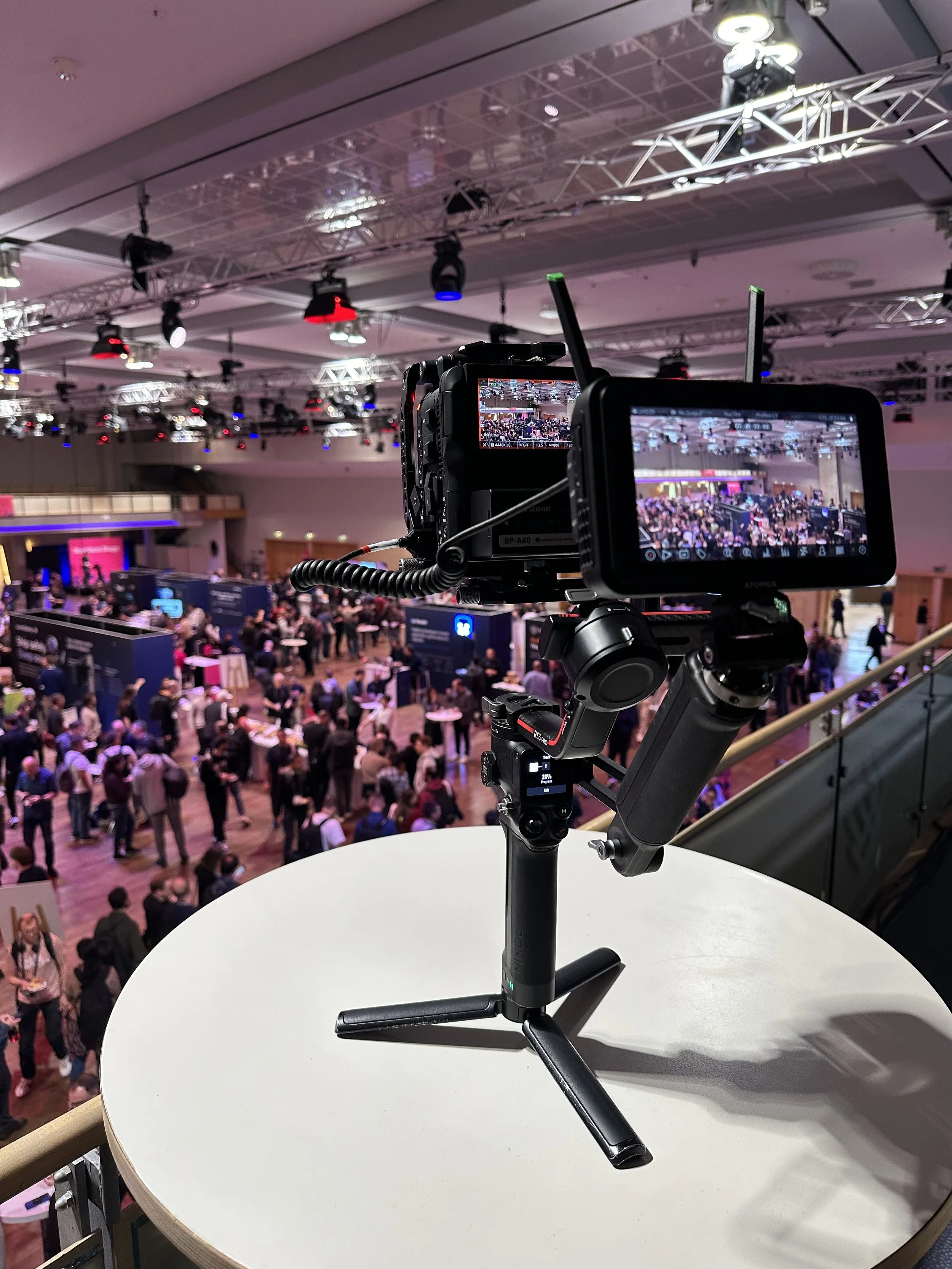
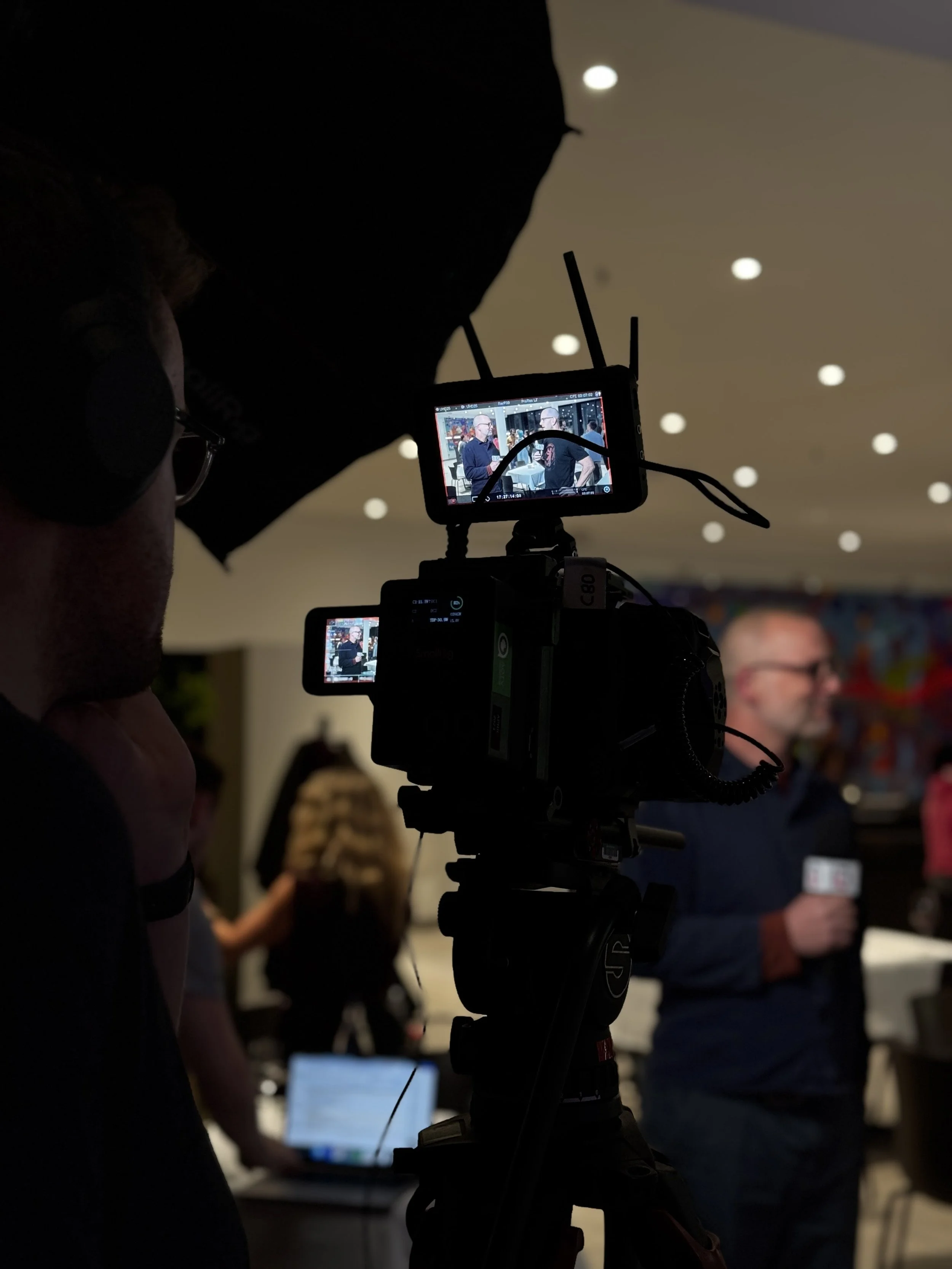
Hardware: We purchased the Atomos Ninja TX as the core product for highlights delivery. It’s a 5” monitor that encodes proxies on the fly and features 2x WiFi antennas.
Cameras: Our core cameras were the Canon C80 and Canon C70. While both have their own C2C integration, the C70 requires an external dongle, and the C80 was too new to test efficiently before traveling. The Atomos provided a unified solution that could easily switch across setups.
Platform: Our cloud platform of choice was Frame.io, selected for its integration with Adobe and its storage price point.
A Tale of Two Cities: Phasing the Rollout
To ensure stability, we deployed this tech across two phases at separate events, gradually increasing the complexity and the reliance on remote connectivity.
Phase 1: Proof of Concept in New York
Our first test was at LeadDev New York. This was a smaller-scale deployment featuring a single operator capturing event highlights. For this phase, we kept the receiving end of the pipeline as robust as possible. Our editor was stationed at our HQ, utilizing our bonded failover internet (1Gb symmetrical). This allowed us to validate the upload capabilities of the hardware on-site without worrying about download bottlenecks at the edit suite. It proved the concept worked: footage landed, and the edit was smooth.
Phase 2: The Stress Test in Berlin
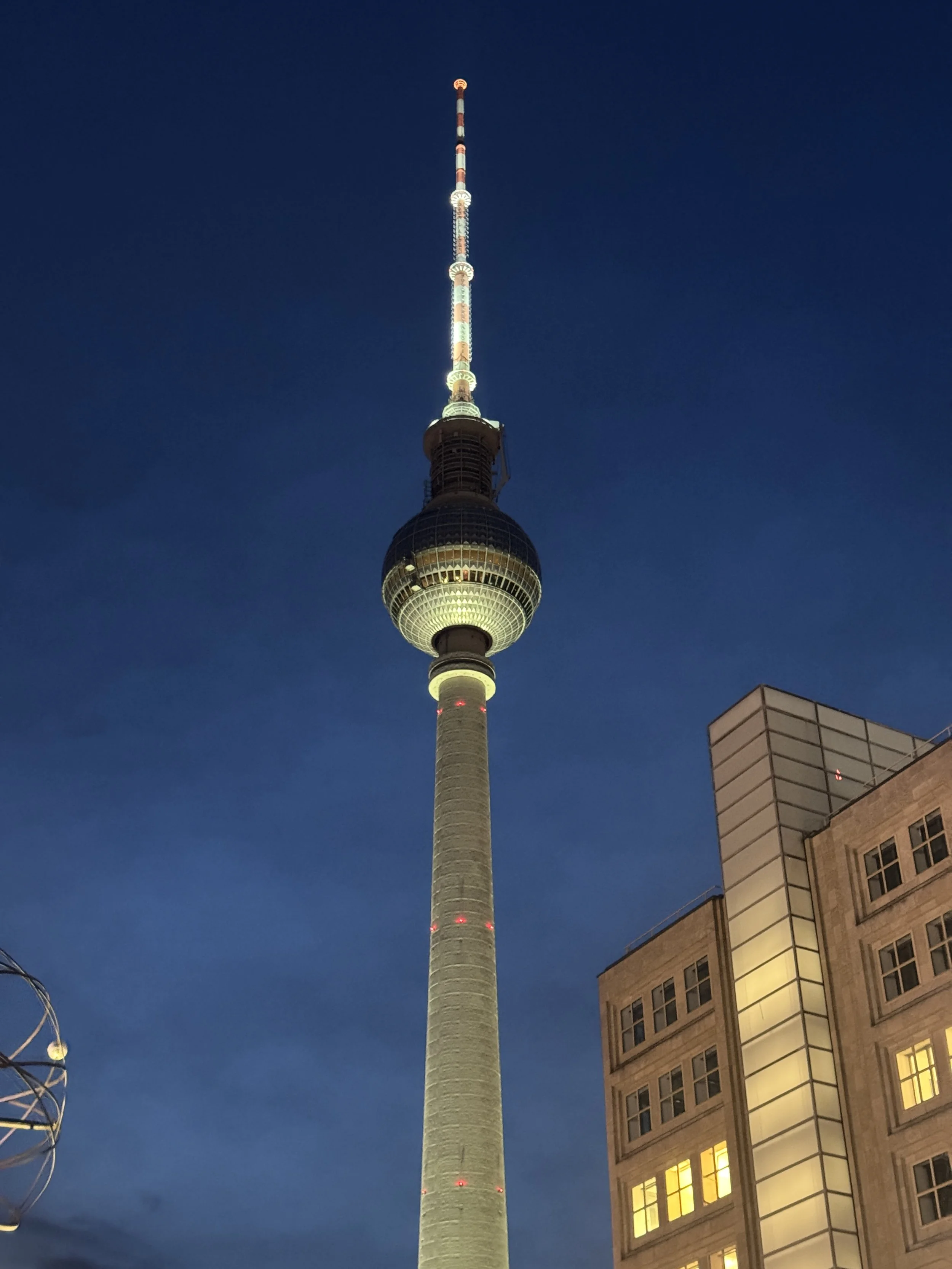
For LeadDev Berlin, we scaled up on this. This involved a small team on-site capturing multi-cam footage, vox pops, and stage content. Crucially, we moved the post-production completely remote. Our editors weren't in the office; they were working from their own homes in the UK, relying on standard domestic internet connections. This was the true test of the "work from anywhere" promise - handling a high volume of assets (sponsor vox pops, interviews, and the Day 2 wrap-up) without the safety net of enterprise-grade office broadband.
Pain Points (and Workarounds)
The transition to the full Berlin workflow highlighted the reality of solely relying on this system. While the workflow was successful, there were significant technical hurdles:
Connectivity vs. Reality: Venue internet in Berlin was unreliable. We resorted to a mobile e-sim for data as a backup option. This was risky, as there are often hidden bandwidth caps, but it saved the day.
Resolution Caps: The Ninja TX had limitations. It capped cloud uploads at 1080p. Furthermore, 50p files were downscaled to 720p, and S&F (Slow & Fast) modes were not compatible. Any high frame rate or timelapse footage had to be recorded to camera media, offloaded, and added to Frame.io separately via a browser.
Software Integration: Frame.io’s integration into Adobe Premiere Pro isn’t quite "there" yet for ingest. It is excellent for reviews (adding draft exports and syncing comments), but for bringing rushes into a project, the functionality felt lacking, and some legacy plugins within the software seemed outdated.
Color Depth: The Ninja TX proxies are limited to 8-bit color depth at 30mb/s. However, we found this provided enough latitude for grading in C-Log3 to deliver high-quality same-day playouts.
Learnings and The Future
Ultimately, we can to the conclusion that this works best as a proxy workflow. We designed our post-production pipeline to use the low-bitrate cloud proxies for the layout and same-day edits at the event. Once the location team was back in the UK, we then replaced these with the original media for high-quality web distribution afterwards.
Key takeaways from this deployment:
Sustainability: This workflow genuinely opens up opportunities to be more nimble and reduce our carbon impact with fewer crew members traveling to the site.
Current State: The tools are constantly improving, but cloud-based workflows are not yet ready for final high-end deliverables without a conform step. It must be treated as a proxy workflow where original footage replaces the cloud files later.
Communication is Key: When your editor is sitting in their living room in the UK and your operator is in Berlin, communication protocols are vital. Letting the editor know exactly when to expect footage and which segments have been filmed is just as important as the bandwidth.
At AOTV, we are committed to reviewing new tools as they become available to ensure we are delivering the best for our clients—and the best for our team.